

FOR IMMEDIATE RELEASE
News from Progress Michigan
October 14, 2026
Contact: Levi Teitel, levi@progressmichigan.org
New Poll: Michiganders Oppose Con-Con
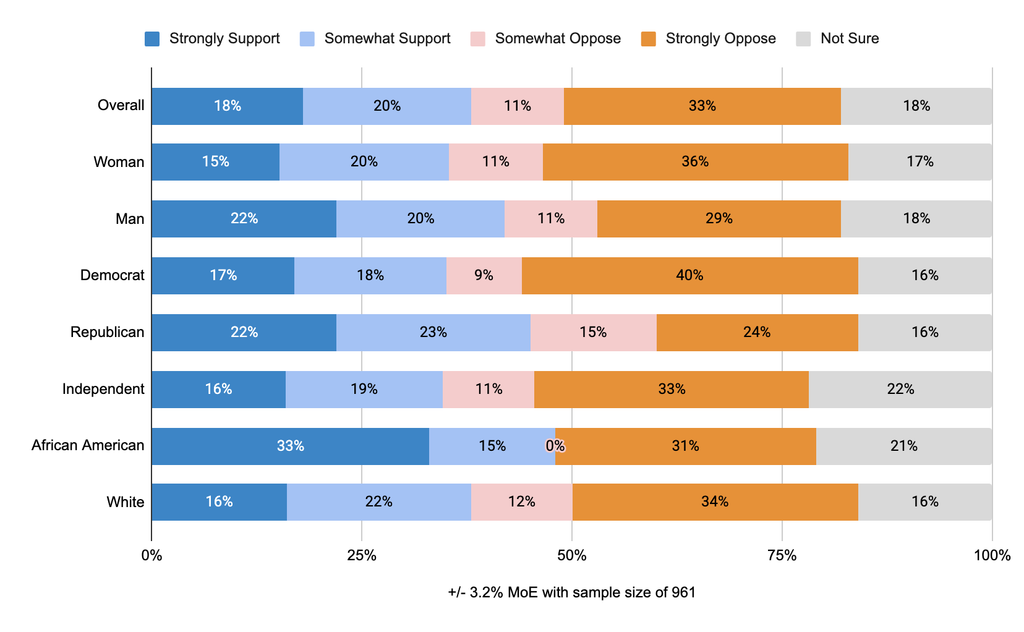
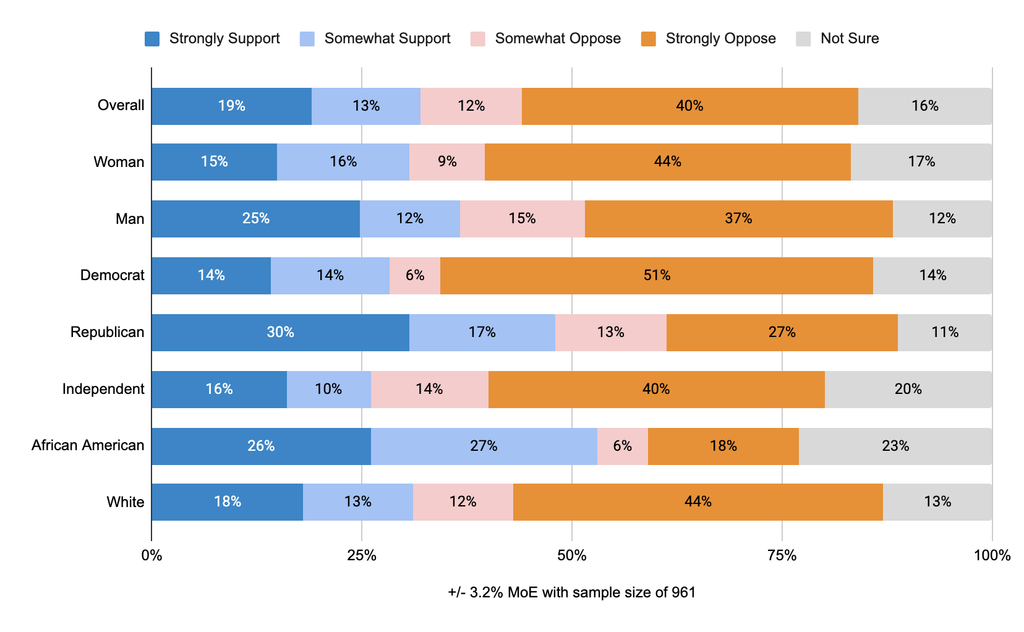
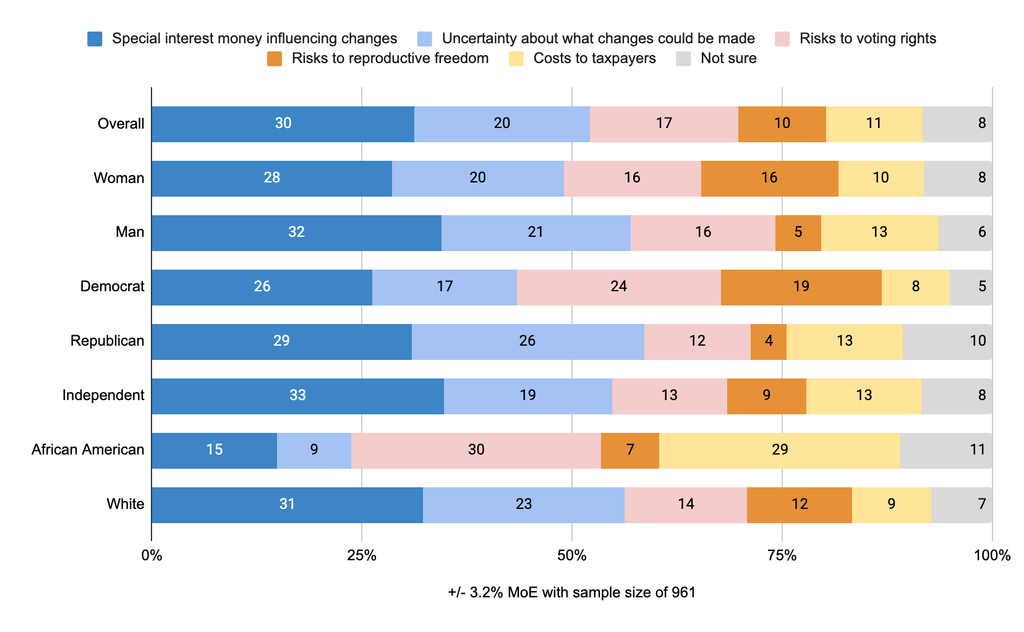
MICHIGAN — Recent polling conducted by Progress Michigan in partnership with Public Policy Polling shows that when respondents are told the stakes that come along with a Constitutional Convention their support of it decreases by six percentage points, while opposition grows by eight percentage points — more than half of respondents surveyed. Additionally, a majority of respondents are most concerned about special interest money influencing changes to the constitution and uncertainty about those changes.
“Michiganders fought hard to have reproductive freedom and voter rights enshrined into our constitution and these results make it clear that they do not want to risk losing that,” said Justin Mendoza, executive director of Progress Michigan. “A Constitutional Convention would open up a Pandora’s box and allow for special interests to strip away the rights that Michiganders enjoy. Our polling makes it clear that voters need to hear about this issue, because more Michiganders oppose the Constitutional Convention once they understand the high stakes that come with it.”
Under Michigan law, every 16 years voters are asked whether the state should hold a Constitutional Convention to consider updates or changes to the Michigan Constitution. If this question were on the ballot today, would you strongly support, somewhat support, somewhat oppose, or strongly oppose holding a Constitutional Convention in Michigan?
If a state Constitutional Convention were held, voter approved ballot measures like expanding voting rights and legalizing abortion could be reversed. Having heard this, let me ask you again: would you strongly support, somewhat support, somewhat oppose, or strongly oppose holding a Constitutional Convention in Michigan?
If a state Constitutional Convention were held, which of the following would you be most concerned about: special interest money influencing changes; risks to voting rights; risks to reproductive freedom; costs to taxpayers; uncertainty about what changes could be made; or none of these?
###