

FOR IMMEDIATE RELEASE
News from Progress Michigan
October 28, 2026
Contact: Levi Teitel, levi@progressmichigan.org
NEW POLL: Data Centers and Officials Who Profit Off Them Are Unpopular
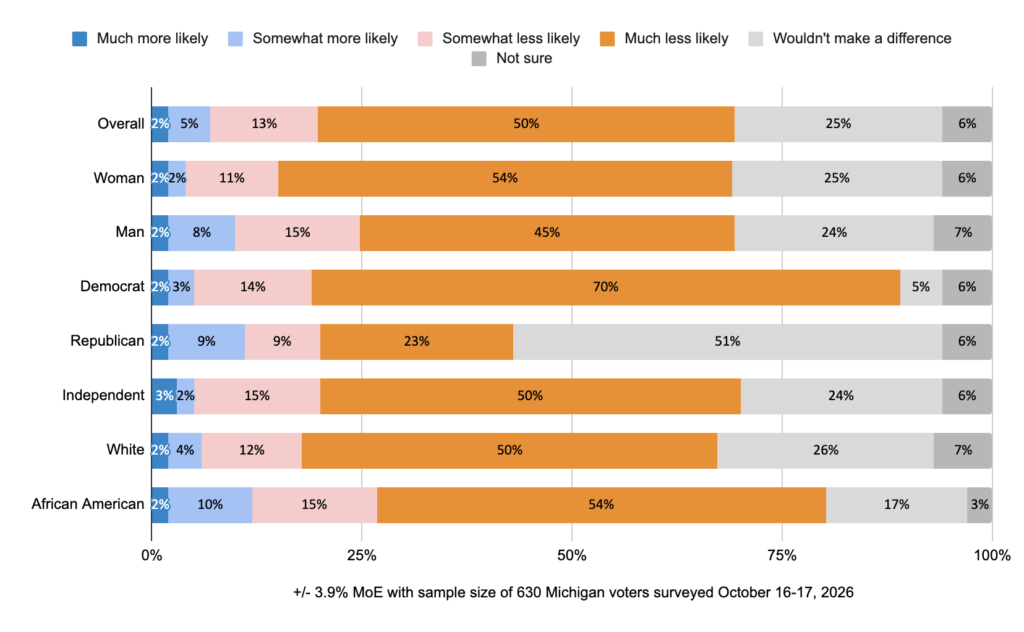
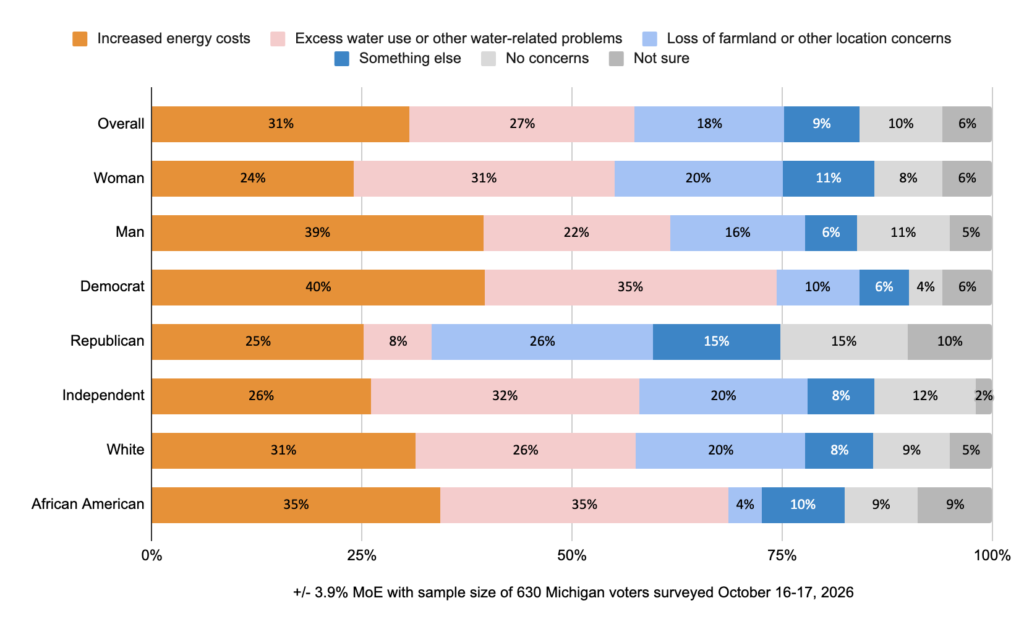
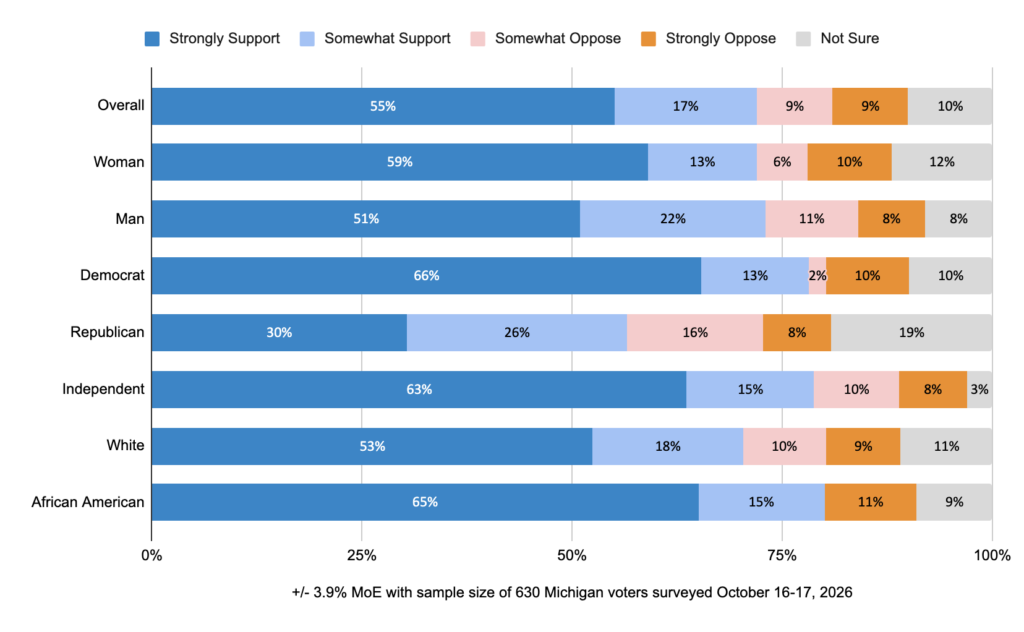
MICHIGAN — Recent polling conducted by Progress Michigan in partnership with Public Policy Polling shows that Michiganders would be less likely to vote for a candidate whose investments could allow them to financially benefit from data center construction. At the same time, respondents’ top concerns related to data center construction are the possibility of increased energy costs and excess water use or other water-related problems. A majority would also support a moratorium on new data centers in their communities.
“Big Tech is having too much influence in Michigan politics, and people know it,” said Justin Mendoza, executive director of Progress Michigan. “This is top of mind among voters with two proposals on the ballot this year that directly impact outsized corporate influence in government. We’ve seen data center projects move forward over the objections of local communities whose concerns about water use, energy costs and transparency have not been meaningfully addressed.
“Michiganders should have the assurance that their elected officials’ tech investments don’t present conflicts of interest while they look to these same leaders for better protections from AI data center development,” Mendoza continued. “Michiganders expect their elected officials to act on these concerns with integrity and in good faith.”
If a candidate held substantial investments in tech companies that could allow the candidate to financially benefit from data center construction, would that make you much more likely, somewhat more likely, somewhat less likely, or much less likely to vote for that candidate, or would it not make a difference?
From the following list of choices, what is your main concern about the effects of hyperscale data center construction in Michigan: increased energy costs, excess water use or other water-related problems, loss of farmland or other location concerns, something else, or do you have no concerns?
Some communities in Michigan are considering data center moratoriums while they prepare policies to protect people and the environment from data center impacts. Would you strongly support, somewhat support, somewhat oppose or strongly oppose a data center moratorium in your community?
###