

FOR IMMEDIATE RELEASE
News from Progress Michigan
January 30, 2026
Contact: Levi Teitel, levi@progressmichigan.org
New Poll: Michiganders Support State Action to Lower Prescription Drug Costs
Voters say lawmakers who oppose lowering drug prices risk electoral consequences
MICHIGAN – On Friday, a new poll released by Progress Michigan shows that Michiganders overwhelmingly support state-level action to lower the cost of prescription drugs, including the creation of a nonpartisan Prescription Drug Affordability Board to review drug prices and set upper payment limits on medications deemed excessively expensive.
“Michiganders expect their state leaders to step up and protect them – especially when the federal government fails to act,” said Levi Teitel, communications coordinator of Progress Michigan. “Prescription drug prices are out of control, and families are paying the price at the pharmacy counter every month. The fact that many Michiganders travel to Windsor or Sault Ste. Marie, Ontario just to be able to get a script filled without getting fleeced is just more evidence that this is a uniquely American problem. When Washington refuses to rein in corporate greed, Michigan lawmakers have both the authority and the responsibility to act. Voters understand that, and they are paying attention to who is standing with them and who is standing in the way.”
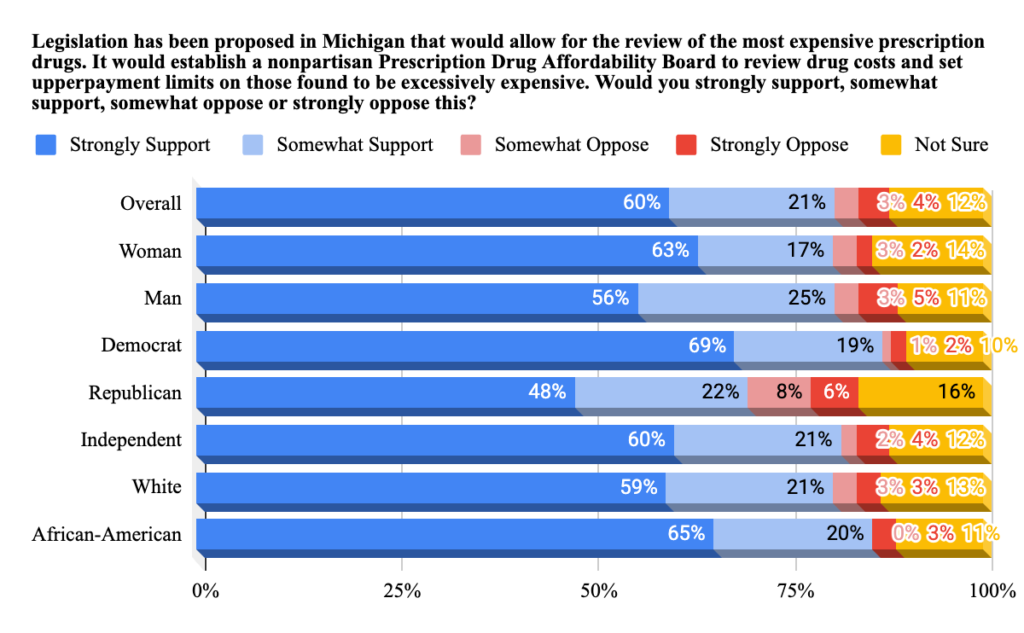
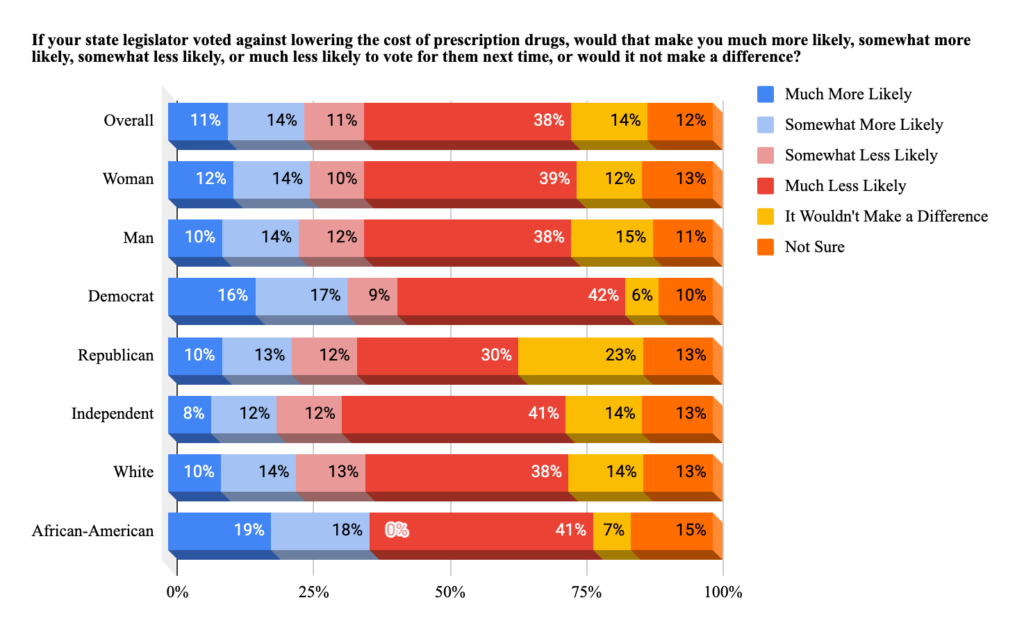
MoE is +/- 3.6 and sample size was 748
###